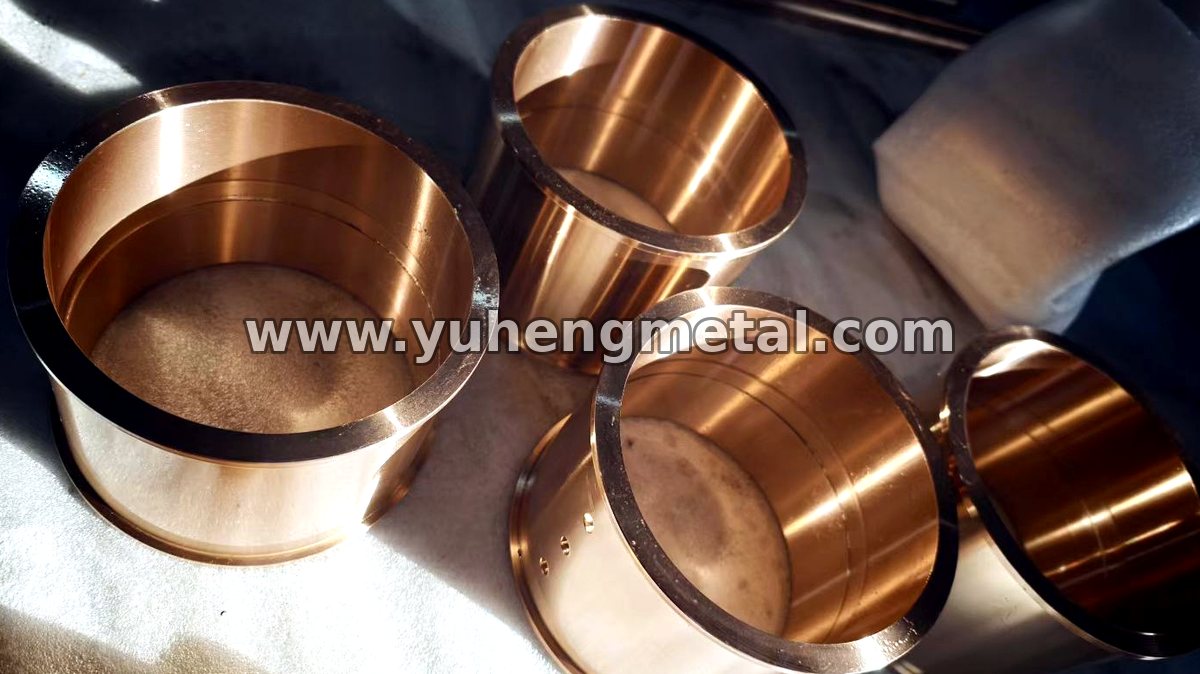
A drawing says C95400, the Chinese supplier quotes ZCuAl10Fe3, and the buyer has to decide whether that is a substitution or a different part. The two designations sit in the same aluminum-bronze family, but a cross-reference table is a starting point, not proof of equivalence. This guide lists the common mappings and the checks that matter before you accept one.
Why a grade cross-reference is only a starting point
China's cast copper alloys are specified in GB/T 1176 and wrought alloys in GB/T 5231. US castings follow ASTM B505 and B271, with UNS numbers identifying the composition family. There is no official one-to-one table between the two systems. Several Chinese grades can fall inside one UNS family, and one UNS number can cover more than one Chinese designation.
The practical risk is not the headline element - it is the range. Tin, zinc, lead, iron and impurity limits differ, and so do the mechanical-property values and the point at which the test bar is taken. Two parts that both read "tin bronze" can behave differently in a worn bearing housing.
Common Chinese grades and their nearest UNS numbers
| Chinese grade | Common name | Nearest UNS | Form | What to watch |
|---|---|---|---|---|
| ZCuSn10P1 | 10-1 tin bronze (phosphor bronze) | C90710 | Cast | The workhorse bearing bronze; C90710 is the nearest UNS family, not an automatic equivalent |
| ZCuSn10Zn2 | 10-2 tin bronze | C90500 | Cast | Zinc-bearing; better fluidity and pressure tightness |
| ZCuSn5Pb5Zn5 | 5-5-5 tin bronze | C83600 | Cast | General-purpose leaded tin bronze; close to C83600 |
| ZCuPb10Sn10 | 10-10 leaded bronze | C93700 | Cast | High lead, good conformability and embeddability, heavy load at low speed |
| ZCuPb15Sn8 | 15-8 leaded bronze | C93800 | Cast | More lead, better anti-seizure, lower load capacity than aluminum bronze |
| ZCuAl10Fe3 | 10-3 aluminum bronze | C95400 | Cast | High strength and wear resistance; composition close to C95400 |
| ZCuAl9Fe4Ni4Mn2 | 9-4-4-2 nickel-aluminum bronze | C95800 | Cast | Seawater, erosion and cavitation duty; close to C95800 |
| QSn6.5-0.1 | 6.5-0.1 phosphor bronze | C51900 | Wrought | Strip, sheet and bar; spring and wear applications |
| QSn7-0.2 | 7-0.2 phosphor bronze | C52000 | Wrought | Bushings, sleeves and spring contacts |
| QSn4-3 | 4-3 tin bronze | C51300 | Wrought | Zinc-bearing tin bronze, balanced strength and ductility |
| QAl10-4-4 | 10-4-4 nickel-iron aluminum bronze | C63000 | Wrought | High-strength wear parts, bar and forgings; close to C63000 |
| QBe2 | 2% beryllium copper | C17200 | Wrought | High elasticity and conductivity; not a general bearing material |
| BZn15-20 | nickel silver 15-20 | C75400 | Wrought | Corrosion-resistant decorative parts, not heavy-duty bearings |
| BFe10-1-1 | 90-10 cupronickel | C70600 | Wrought | Seawater piping and condensers; corrosion duty |
| BFe30-1-1 | 70-30 cupronickel | C71500 | Wrought | High-nickel cupronickel for marine service |
| H62 | 62 brass | C27400 | Wrought | General-purpose brass, moderate strength |
| H59 | 59 brass | C28000 | Wrought | Low cost, free machining |
| HSn62-1 | naval brass 62-1 | C46400 | Wrought | Seawater resistance, marine and heat-exchanger duty |
| ZCuZn25Al6Fe3Mn3 | 25-6-3-3 high-strength brass | C86300 | Cast | Aluminum-manganese brass; wear plates and worm wheels; close to C86300 |
| CuSn12 | 12% tin bronze (CC483K) | C90800 | Cast | EN/DIN system; bearings and gears |
| T2 | ETP copper | C11000 | Wrought | Electrical and thermal conductivity; not a bearing material |
| ZCuZn16Si4 | 16-4 silicon brass | C87400 | Cast | Corrosion resistant, good castability |
The UNS column is a search aid taken from our grade register. It is not a statement of equivalence. Confirm the current standard text and the supplier's test report before approving a substitution.
Four differences that decide whether a substitute works
1. Composition ranges. GB/T 1176 and the ASTM casting standards do not set identical upper and lower limits for every element. Zinc and lead in tin bronze, iron and nickel in aluminum bronze, and total impurity allowances all affect castability, machinability and the finished structure.
2. Where the test bar comes from. A separately cast test bar, an attached bar and a sample cut from the casting can give very different tensile and elongation figures. ASTM often separates requirements by casting method; Chinese standards also distinguish separate and attached bars. State the sampling position in the purchase order.
3. Casting method. Centrifugal castings are generally denser and less segregated than sand castings of the same grade. Sand-cast properties should not be used to predict a centrifugal part, or the reverse.
4. Temper and heat treatment. This matters most for wrought grades. QBe2 in the aged condition and QSn6.5-0.1 in hard or soft temper have very different strength and spring properties. The grade name alone does not define the delivered condition.
What to check before accepting a substitution
- Chemistry: main-element ranges, impurity totals, and restricted elements such as lead or cadmium for the destination market.
- Mechanical properties: tensile strength, yield, elongation and hardness, together with the casting method and sampling position used for acceptance.
- Duty: load, surface speed, lubrication, operating temperature and corrosive medium. These decide whether tin bronze, leaded bronze, aluminum bronze or a babbitt lining is appropriate in the first place.
- Documents: mill certificate, heat number, non-destructive testing and dimensional report. For export, confirm the destination standard and marking requirements.
If the drawing carries only a UNS number, ask the supplier to state the Chinese grade, the measured chemistry and the mechanical report, and write the acceptance standard into the order. That prevents a long argument after the castings arrive.
Questions buyers ask
Is ZCuSn10P1 the same as C90710?
The composition family is close, but they are not automatically interchangeable. Tin, phosphorus and impurity limits, and the mechanical-property acceptance rules, differ between GB/T 1176 and the ASTM standards. Ask for chemistry and test results before approving a substitution.
Can ZCuAl10Fe3 replace C95400?
For many heavy-load, wear-resistant duties it is a sensible direction, but check the aluminum and iron ranges and the casting method. Where elongation or corrosion resistance is critical, confirm the grade and heat treatment before ordering.
Why do quotes for the same grade vary so much?
Raw-material purity, casting method (sand, centrifugal or permanent mold), scrap ratio, heat treatment and machining allowance all move the price. Comparing only the grade name can put different acceptance standards side by side.
Which standard should the purchase order cite?
Cite the standard that governs acceptance, not just the grade. State the casting method, test-bar sampling position, mechanical properties and any additional inspection. If the drawing carries a UNS number, name the Chinese grade and the agreed acceptance standard alongside it.
Related reading
Aluminum bronze vs tin bronze bushings: which to specify
Babbitt bearing shells explained: grades, melting point and failure modes
Zinc alloy bearings vs bronze bearings: how to choose
Choosing a babbitt bearing shell manufacturer: RFQ guide
Related products
 Tin / aluminum bronze
Copper Alloy Castings & Bronze Bushings
Centrifugal and sand-cast copper alloy parts - tin bronze, aluminum bronze and brass bushings, copper sleeves and retaining rings machined to spec.
Learn more →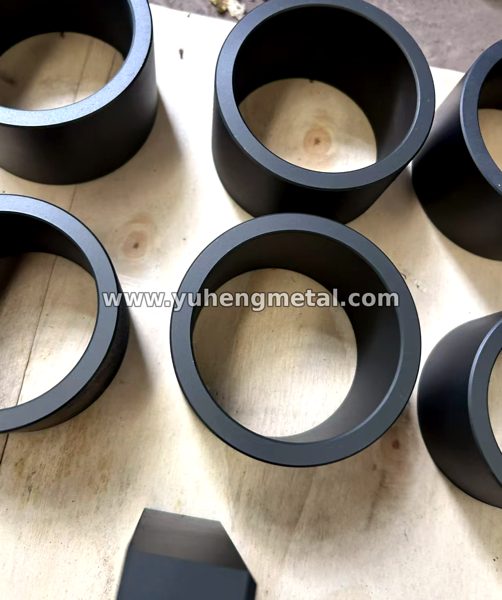 Slide bearings
Self-Lubricating Slide Bearings & Wear Plates
Self-lubricating slide bearings and wear plates for linear and rotary motion in heavy machinery, sized and machined to your housing.
Learn more →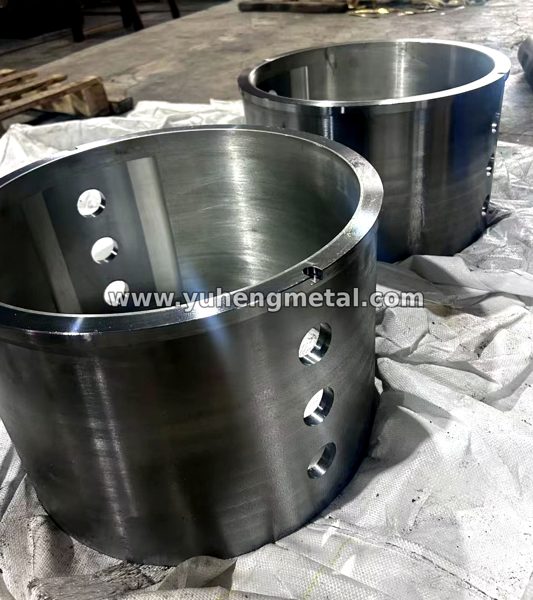 Babbitt & oil-film
Babbitt Bearing Shells & Oil-Film Bearings
Babbitt (white metal) bearing shells and oil-film bearings for heavy-duty rotating equipment - cast, bonded and machined to drawing.
Learn more →