Zinc-based alloys and bronze are the two workhorses of industrial plain bearings, and the question of which is better has no single answer - they win in different places. This guide compares them on the things that actually decide service life: load, speed, temperature, lubrication, corrosion and cost. It then maps the comparison onto kilns, mills and general industrial duty.
What zinc-based and bronze bearings are
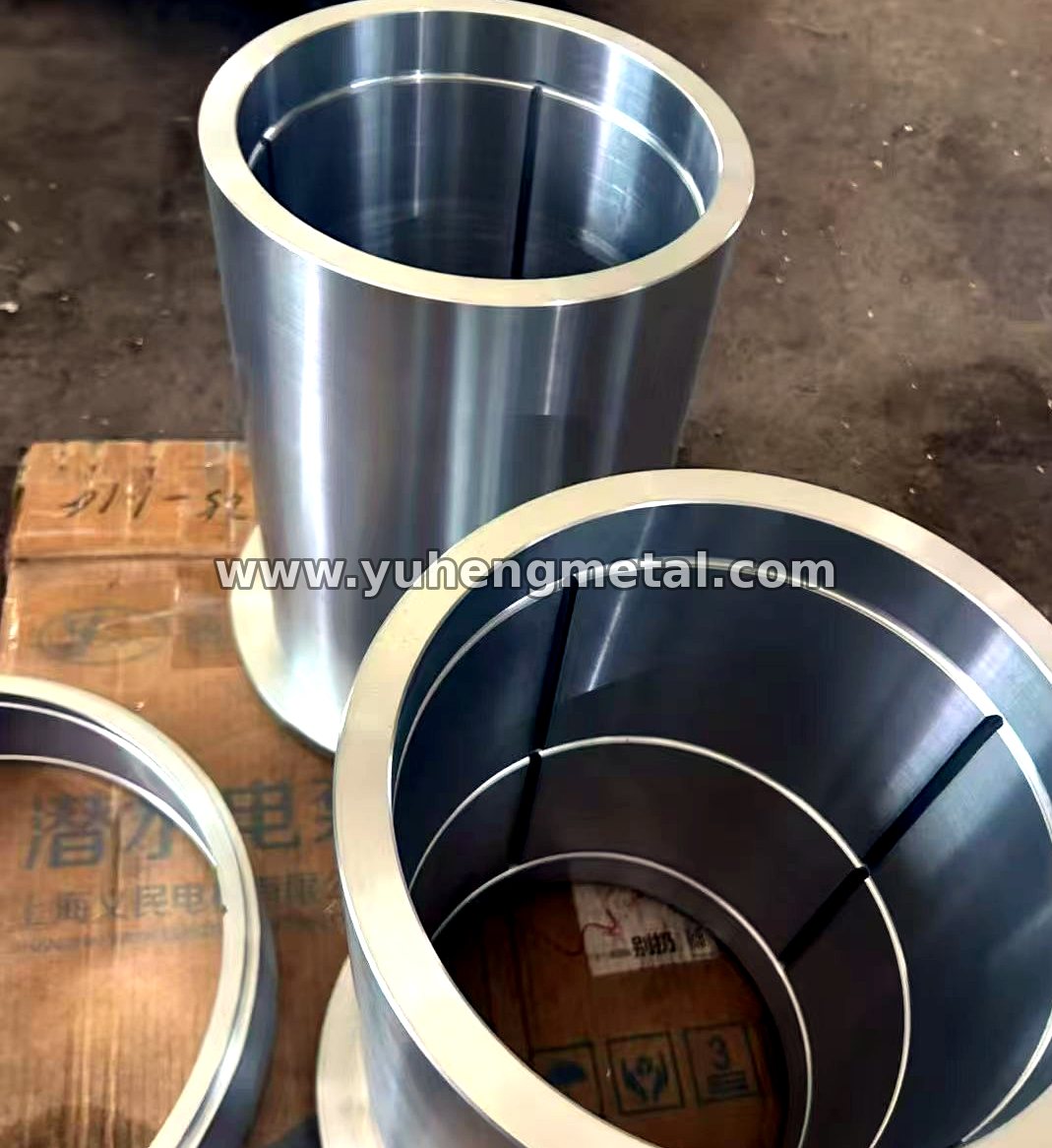
Zinc-based bearing alloys are cast zinc-aluminum materials, commonly including copper for strength - the ZA family and the Chinese ZA303 grade are typical. They are cast into liners, pads and bushings, and are often used where a tin bronze would once have been specified, because the raw material costs less and the parts machine easily.
Bronze means a copper-based alloy. Two families matter for bearings: tin bronze, such as ZCuSn10P1 and ZCuSn5Pb5Zn5 (and the leaded tin bronze known as C93200 or SAE 660), and aluminum bronze, such as ZCuAl10Fe3 or the C95400 and C95500 nickel-aluminum bronzes. All of these are covered by standards such as GB/T 1176, the ASTM copper-alloy casting standards and EN 1982, which is where exact minimum properties belong.
Both zinc-based and bronze bearings are solid materials - unlike Babbitt, they are not a thin lining on a steel back. That shapes everything that follows.
Zinc alloy bearings vs bronze bearings: the short answer
- Zinc-based alloy: lower cost, good load capacity, good conformability and emergency-running behaviour, but lower speed and temperature limits, poorer corrosion resistance, and a tendency to creep at elevated temperature.
- Bronze: higher speed and temperature capability, better corrosion resistance (especially aluminum and nickel-aluminum bronze in wet or marine duty), higher wear resistance - at a higher material cost, and in the case of aluminum bronze, harder machining.
- Rule of thumb: high load with moderate speed in a protected, well-lubricated location points to zinc; high speed, high temperature or a corrosive environment points to bronze.
Load capacity and strength
Cast zinc-aluminum alloys have useful compressive strength and, part for part, can approach or exceed a modest bronze in pure load-carrying terms while weighing less. The catch is that zinc alloys lose strength and creep more readily as they warm, so their load advantage narrows in hot duty. Within bronze, aluminum bronze is the stronger and harder material and carries the heaviest loads and abrasion; tin bronze is softer and lower in strength but far more forgiving of misalignment.
Speed and PV limits
The design number for any plain bearing is PV - contact pressure multiplied by surface velocity. Zinc-based bearings perform best at moderate surface speeds, where the generated heat can be carried away by lubricant and by conduction through the housing. At high speed the lining temperature rises, the alloy softens and the risk of galling against the shaft climbs. Bronze tolerates higher surface speeds, particularly with a good oil feed, which is why high-speed shafts are usually bronze or Babbitt rather than zinc.
Temperature
Temperature is where the two separate most sharply. Zinc-aluminum bearing alloys should generally be kept below about 100 °C; above that they soften and creep, and the fit in the housing can be lost. That matters on hot machinery: on a rotary kiln or dryer, the trunnion or riding ring itself can be hot, and the running temperature at the bearing is what has to be controlled, not just the ambient air. Bronze, and aluminum bronze in particular, holds its properties to noticeably higher temperatures and is the safer choice where the shaft or the surroundings run hot.
Lubrication
Neither material is self-lubricating unless it is deliberately designed that way with oil grooves, grease ways or solid-lubricant inserts. In general duty both rely on a lubricant film. Zinc alloy benefits from a reliable oil or grease supply, and depends on it more as speed rises. Bronze copes better with marginal or intermittent lubrication and is more tolerant of a brief dry spell, which is one reason it survives in older or less well-maintained plant.
Corrosion
Zinc is reactive: it corrodes in acids and alkalis and needs protection - paint, coating or a sheltered position - in moist or chemically aggressive surroundings. Bronze, and above all nickel-aluminum bronze, resists seawater, most industrial atmospheres and many process fluids. In a wet, acidic or marine environment, the comparison is not close: bronze wins, and a zinc bearing may need to be replaced with one.
Cost and availability
Zinc-based alloys are cheaper per kilogram than tin bronze, and they machine freely, which cuts finished cost further and usually shortens lead time. Aluminum bronze costs less in raw material than tin bronze but is harder to machine, so the finished-cost gap is narrower than the metal price alone suggests. The real comparison is total cost of ownership: a cheaper bearing that fails early, or that scores the shaft, costs far more than the saving on the part.
Where each belongs: kilns, mills and general duty
On rotary kilns, dryers and grinding mills, trunnion and support-roller bearings are frequently specified in zinc-based alloy. The loads are high, the rotation is slow, and the parts are large, so the lower material cost and easy casting of zinc-aluminum alloy are attractive - provided the shell is lubricated and the running temperature is kept down. Where the trunnion runs hot, or the site is wet and dusty, bronze is often the better answer.
In mills and crushers, shock and misalignment are common, and a conformable tin bronze can absorb them better than a harder material. Where abrasion and steady load dominate, aluminum bronze earns its place, again with attention to alignment and lubrication. For general industrial duty - conveyors, mixers, pump bearings, general bushings - the decision usually comes down to speed, temperature and environment: zinc for cost-sensitive, moderate-speed jobs in dry service; bronze where reliability, heat or corrosion matter more than price.
How to choose
Write down the load, the surface speed, the running temperature, how the bearing will be lubricated, what the environment will do to it, and what a failure would cost. Those six answers usually pick the material for you. Then design the lubrication and relief features to suit the material you have chosen rather than relying on the alloy alone.
Questions we get asked
Is zinc alloy a direct substitute for bronze in bearings?
Often, but not always. Zinc-aluminum bearings can replace bronze in many moderate-speed, well-lubricated, dry applications, and at lower cost. They should not be used as a straight substitute where the shaft runs hot, where speeds are high, or where the environment is wet or chemically aggressive - there bronze, especially aluminum bronze, is the safer choice.
Which is better at high temperature?
Bronze. Zinc-aluminum bearing alloys should generally be kept below about 100 °C, above which they soften and creep and can lose their fit in the housing. Aluminum bronze in particular retains its properties to noticeably higher temperatures, so hot shafts and hot surroundings favour bronze.
Do zinc alloy or bronze bearings need lubrication?
Yes, in general duty both rely on an oil or grease film. Neither is self-lubricating unless oil grooves, grease ways or solid-lubricant inserts are designed in. Zinc benefits from a reliable lubricant supply as speed rises; bronze tolerates marginal or intermittent lubrication better.
Which material is more corrosion resistant?
Bronze, and nickel-aluminum bronze above all. Zinc is reactive and corrodes in acids, alkalis and moist environments unless it is protected by coating or a sheltered position. In wet, acidic or marine duty, bronze is the correct choice.
Which is cheaper - zinc alloy or bronze bearings?
Zinc-based alloy is cheaper per kilogram and machines more freely, so the finished part costs less and usually ships sooner. Tin bronze is the most expensive because of its tin content; aluminum bronze sits in between, since its raw material is cheaper than tin bronze but it is harder to machine.
Related reading
Babbitt Bearing Shells Explained: white metal grades, melting point and how they fail
Rotary Kiln Trunnion Bearings: design, replacement and service
Choosing a Babbitt Bearing Shell Manufacturer: RFQ Guide
Aluminum Bronze vs Tin Bronze Bushings: Which to Specify
Related products
 Zinc-based alloy
ZA303 Zinc-Based Alloy Bearings & Bushings
Cast ZA303 zinc-aluminum alloy bearings and bushings for high-load, moderate-speed duty - a lower-cost alternative to tin bronze where the duty allows.
Learn more → Tin / aluminum bronze
Copper Alloy Castings & Bronze Bushings
Centrifugal and sand-cast copper alloy parts - tin bronze, aluminum bronze and brass bushings, copper sleeves and retaining rings machined to spec.
Learn more → Heavy industry
Rotary Kiln Trunnion & Support Roller Bearings
Wear-resistant trunnion bearings, support-roller bearing pads and hollow-shaft bearings for rotary kilns, dryers and grinding mills.
Learn more →