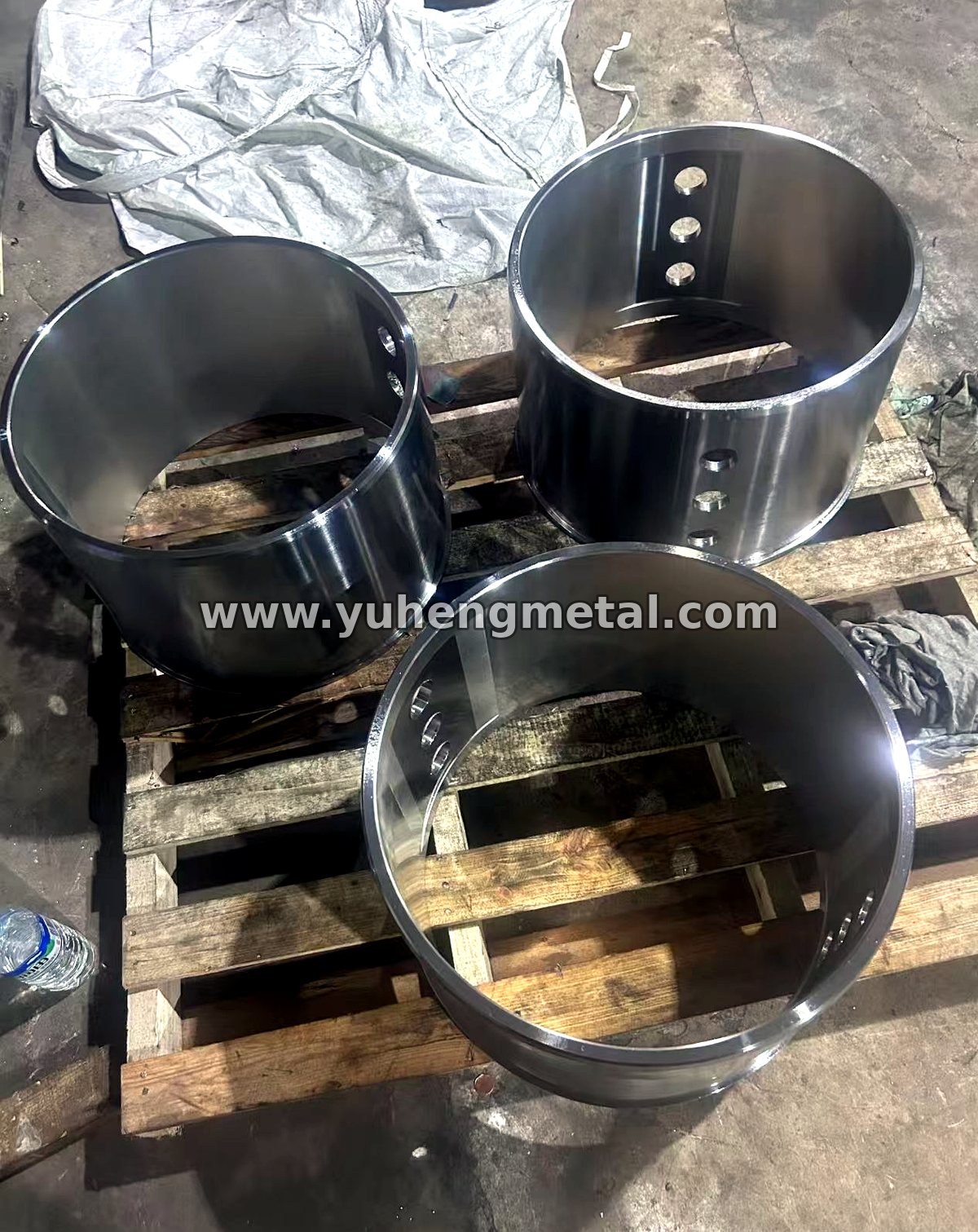
Buying a babbitt bearing shell is not like buying a standard bushing off a shelf. The lining is soft and thin, and almost everything that decides whether the shell survives its first year is settled before the metal is poured - the alloy grade, the way the lining is bonded to the back, and the accuracy of the final machining. This is a practical guide to specifying, sourcing and verifying that work with a babbitt bearing shell manufacturer.
What a babbitt bearing shell manufacturer actually does
A bearing shell is a composite: a stiff steel, cast-iron or bronze back carrying a thin, conformable white-metal lining. That means three separate operations, and any one of them can be the reason a shell fails in service.
- Making and preparing the back. The shell back is cast or machined first, with whatever retention the design needs - dovetail grooves, keyways, oil holes and oil ways, dowel holes and split faces. Its bore must be clean and correctly tinned before the lining goes on; a contaminated or un-tinned back is a classic cause of a lining that lifts.
- Casting or bonding the lining. White metal is applied by static casting or by centrifugal lining over the prepared back. The metal must be at the right temperature and the back correctly pre-heated, or the bond is weak even when the shell looks sound from outside.
- Machining. After lining, the bore is machined to the journal clearance, oil ways and grooves are cut, and end faces, split faces and dowel holes are finished so the shell seats correctly in its housing.
Ask who performs all three: a maker who casts, bonds and machines under one roof has fewer places for a defect to hide.
What to put in an RFQ for bearing shells
A clear enquiry gets a fast, comparable quote. Useful to include:
- A drawing, or the worn part. Housing bore, shell outside and inside diameter, length, wall thickness and target lining thickness.
- The alloy, by standard and grade. For example ASTM B23 Grade 2 (tin-based) or GB/T 1174 ZSnSb11Cu6. If you do not know the grade, say so and describe the duty instead.
- Quantity, and whether it is new or a re-line. Re-lining your existing shells is usually cheaper and faster than a new build because no pattern or backing casting is needed.
- Duty conditions. Shaft diameter and speed, load, oil type and feed, running temperature, and whether the environment is dusty, wet or corrosive.
- Features. Oil holes and oil ways, grooves, thrust faces, dovetails or keys, and how upper and lower halves are identified and paired.
- Inspection and paperwork. Material certificate, dimensional report, and a bond inspection report if you want one.
Alloy grade: fix this first
White metal is a family, not a single material. Tin-based Babbitt - tin with antimony and copper, such as ASTM B23 Grades 1 to 3, or GB/T 1174 ZSnSb8Cu4 and ZSnSb11Cu6 - gives the best conformability and corrosion resistance and carries the highest loads; it is the standard for turbines, generators, large pumps and other high-speed shafts. Lead-based Babbitt (ASTM B23 Grades 7, 8 and 15) is cheaper and tolerates slightly higher temperature, but carries less load, resists water and acidic oil poorly, and is increasingly avoided where lead content is restricted.
Specify the grade on the drawing and ask for the material certificate. Chemistry should be confirmed by spectrochemical analysis - optical emission spectroscopy or XRF - against the standard, either by the maker or by an independent laboratory if the part is critical.
Bonding is where shells fail
Most premature Babbitt failures are not a chemistry problem; they are a bond problem. If the lining is not metallurgically bonded to the back over the whole load-bearing area, it will lift, crack or work loose long before the alloy itself wears out.
The bonding process therefore matters as much as the grade. Ask how the back is prepared (degreasing, grit blasting, and tinning the bore before casting), how the lining is applied, and - most importantly - how the result is inspected. Ultrasonic bond inspection is the standard non-destructive method for white-metalled shells: it maps the bonded area and reveals voids and unbonded patches that a visual check cannot see. A tap or ring test will catch gross defects but will not prove a sound bond; a documented ultrasonic report will. Ask what percentage of bonded area is guaranteed and how it is measured.
Lining thickness is the other half of the bond question. Thin linings - commonly 1 to 5 mm on industrial shells, thinner still on high-speed machines - carry high loads without fatigue but demand a sound bond and a straight housing.
Questions to ask a babbitt bearing shell manufacturer
- Which alloy grade, to which standard, and can you supply the material certificate?
- How is the lining bonded, and what bond inspection do you perform and report?
- What lining thickness do you recommend for our duty, and why?
- What bore tolerance, roundness and surface finish will you hold?
- Can you re-white-metal our existing shells as well as make new ones?
- How are the shells marked and paired, and are they checked for contact pattern before despatch?
- What is the lead time for a new shell versus a re-line?
Tolerances and clearance to check on delivery
When the shells arrive, check bore diameter against the drawing, roundness, shell thickness and - on thrust faces - flatness and squareness, and confirm oil holes line up with the housing feed. Diametral clearance for a Babbitt bearing is traditionally about 0.001 in per inch of journal diameter (about 0.001 mm per mm). After fitting, a blue contact check should show the shell bedding evenly, with no hard spots at the split faces.
Lead times and re-lining
Re-lining existing shells is normally the quicker route because it avoids a new pattern or backing casting: you ship the worn shells, the old lining is stripped, the backs re-prepared and the new lining cast and machined. A new shell adds pattern or tooling time on top, so state your required date in the RFQ.
How to choose a manufacturer
For a part this consequential, choose a maker who casts, bonds and machines in-house, inspects the bond, and will put the material and inspection paperwork in the box. Two documents tell you most of what you need to know: the alloy certificate and the bond inspection report. A supplier who can produce both, on request, is the one worth keeping on the approved list.
Questions we get asked
Can you re-line our existing Babbitt bearing shells instead of making new ones?
Yes, and it is usually the cheaper and faster route. The old lining is stripped, the backing is inspected and re-prepared, then re-tinned and re-cast, and the bore is machined to the journal clearance. Send the worn shells with a drawing or the main dimensions and we will confirm whether the backing is reusable.
What alloy grade should I specify for a high-speed shell?
For turbines, generators, large pumps and other high-speed shafts, a tin-based Babbitt such as ASTM B23 Grade 2 or GB/T 1174 ZSnSb11Cu6. Tin-based Babbitt gives the best conformability and corrosion resistance and carries the highest loads. Lead-based Babbitt is cheaper but carries less load and resists water and acidic oil poorly.
How is the bond between the Babbitt and the shell checked?
By ultrasonic bond inspection, which maps the bonded area and reveals voids and unbonded patches that a visual check cannot. A tap or ring test only catches gross defects. Ask for a documented bond inspection report and the guaranteed bonded-area percentage.
What information do you need to quote a Babbitt bearing shell?
A drawing or the worn part, housing bore, journal diameter, length and lining thickness, the alloy grade (or the duty if you do not know it), quantity, features such as oil holes and dovetails, and whether it is a new shell or a re-line. Duty conditions - speed, load, oil and running temperature - help us recommend the grade.
What tolerance and clearance should I expect?
The bore is machined to the tolerance you specify, with roundness and surface finish suitable for an oil-film bearing. Traditional diametral clearance for Babbitt is about 0.001 in per inch of journal diameter (about 0.001 mm per mm). Confirm the clearance you want in the RFQ.
Related reading
Babbitt Bearing Shells Explained: white metal grades, melting point and how they fail
Rotary Kiln Trunnion Bearings: design, replacement and service
Zinc Alloy Bearings vs Bronze Bearings: How to Choose
Aluminum Bronze vs Tin Bronze Bushings: Which to Specify
Related products
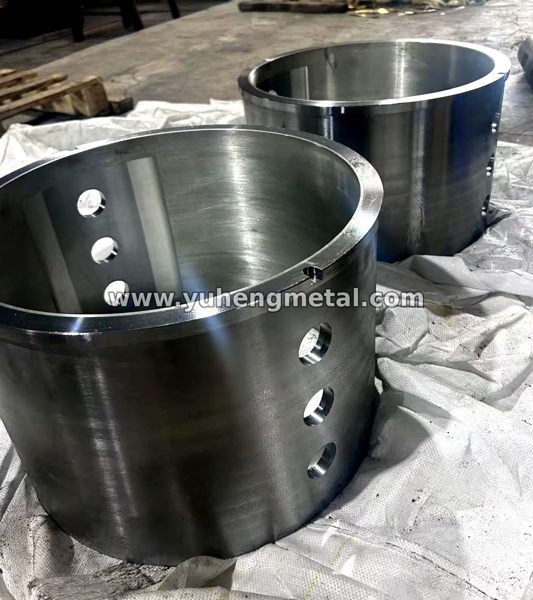 Babbitt & oil-film
Babbitt Bearing Shells & Oil-Film Bearings
Babbitt (white metal) bearing shells and oil-film bearings for heavy-duty rotating equipment - cast, bonded and machined to drawing, in tin-based and lead-based alloys.
Learn more →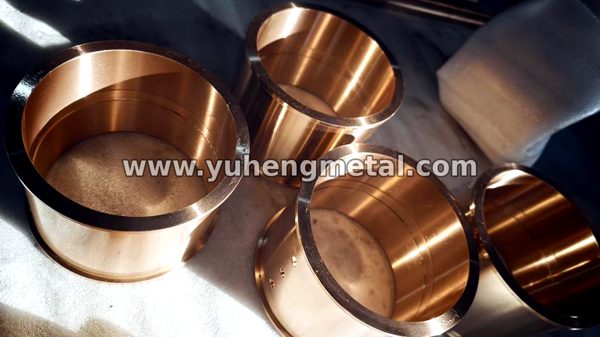 Tin / aluminum bronze
Copper Alloy Castings & Bronze Bushings
Centrifugal and sand-cast copper alloy parts - tin bronze, aluminum bronze and brass bushings, copper sleeves and retaining rings machined to spec.
Learn more →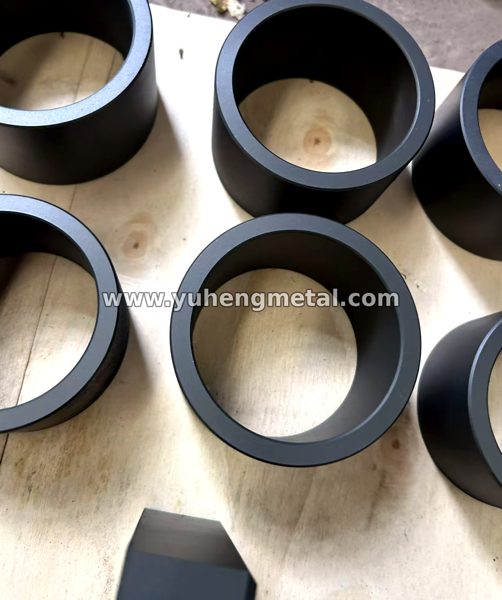 Slide bearings
Self-Lubricating Slide Bearings & Wear Plates
Self-lubricating slide bearings and wear plates for linear and rotary motion in heavy machinery, sized and machined to your housing.
Learn more →