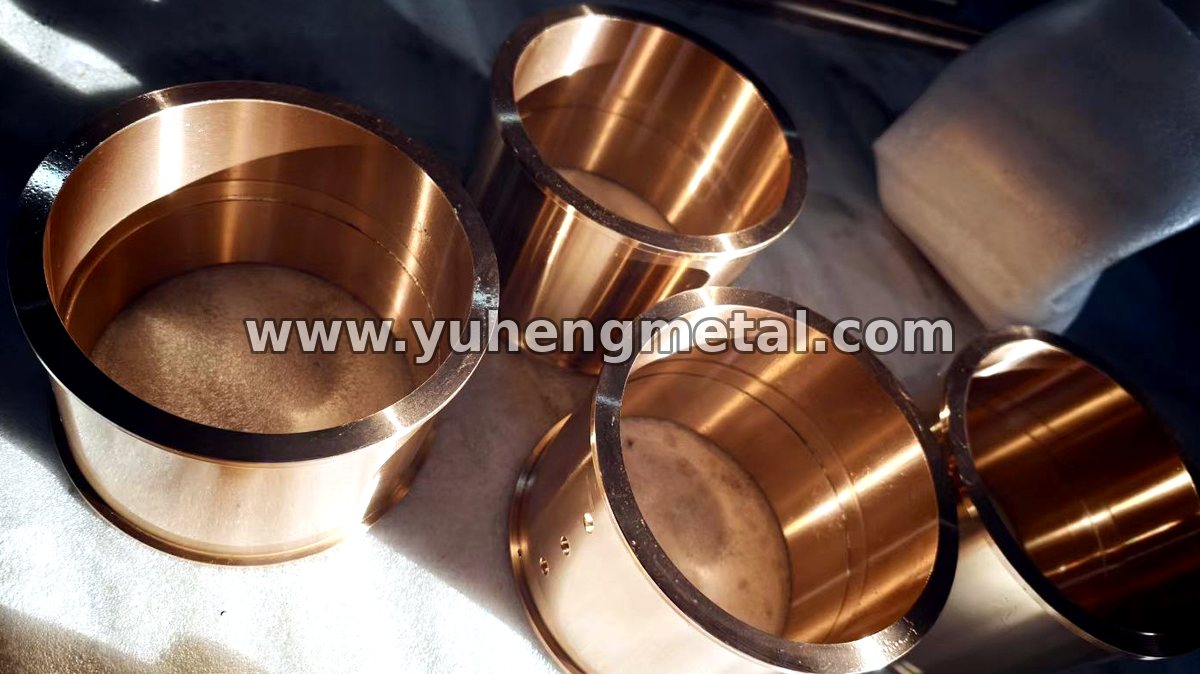
Both are copper alloys, both are used for bushings and bearings, and on a drawing one can usually be substituted for the other to suit a price. But they behave very differently running against a steel shaft: one conforms and embeds dirt, the other resists wear and carries load. Choosing between aluminum bronze and tin bronze is really a decision about load, speed and what happens when lubrication falters.
Aluminum bronze vs tin bronze: the fundamental difference
Tin bronze is copper alloyed mainly with tin - typically 5 to 12 percent - often with lead and zinc. It is the classical bearing bronze, soft enough to bed in and forgiving of real-world misalignment, and it machines to a fine finish. Common grades include ZCuSn10P1 and ZCuSn5Pb5Zn5, and the leaded tin bronze known as C93200 or SAE 660.
Aluminum bronze is copper alloyed mainly with aluminum - around 9 to 11 percent - with iron and sometimes nickel added to refine the structure and raise strength. ZCuAl10Fe3 and the C95400 and C95500 nickel-aluminum bronzes are typical. It is a much stronger, harder material.
Exact compositions and minimum properties belong in the standards - GB/T 1176 for cast copper alloys, the ASTM copper-alloy casting standards, and EN 1982 - rather than on a blog. What matters here is how the two families divide the job.
Strength, hardness and load capacity
Aluminum bronze is roughly twice as strong as tin bronze and considerably harder. As a rough order, cast tin bronzes sit in the low hundreds of megapascals in tensile strength, while aluminum bronzes reach several hundred megapascals - check the standard for the exact grade. That translates directly into load capacity: aluminum bronze bushings carry heavier loads and resist abrasion, wear and deformation far better, and hold their shape under high specific pressure. Tin bronze, being softer and weaker, deforms and beds in instead of resisting.
Conformability, embeddability and shaft protection
This is the counterweight to strength. Tin bronze's softness lets the bushing conform to a slightly misaligned or deflecting shaft, spreading the load instead of concentrating it at an edge, and lets abrasive grit embed in the bronze rather than scoring the journal. In dusty, poorly aligned or marginal-lubrication duty, that behaviour is worth more than extra strength.
Aluminum bronze has poorer embeddability and conformability. Under the same dirt or misalignment, it tends to score the shaft, and edge loading can crack or overheat it. If you upgrade from tin to aluminum bronze, you should also improve alignment, cleanliness and lubrication - otherwise you may simply move the failure from the bushing to the shaft.
Speed, lubrication and seizure
Tin bronze is the better high-speed and low-friction choice, and it tolerates marginal lubrication and short interruptions better. Aluminum bronze performs best at low to moderate speed with high load; it is more prone to galling and seizure against a steel journal if the lubricant film is lost, and it rewards a reliable, generous oil supply and a suitably hard or polished journal.
Corrosion and temperature
Aluminum bronze is the more corrosion-resistant of the two, and nickel-aluminum bronze in particular is a standard choice for seawater, marine and many process-fluid environments, where it also resists erosion. Tin bronze performs well in fresh and general industrial atmospheres but is less resistant to seawater and can suffer selective corrosion, especially in leaded or zinc-bearing grades.
On temperature, aluminum bronze again has the edge: it retains strength to higher operating temperatures and oxidises less. Tin bronze's useful range is lower, though still generous for normal industrial duty.
Machinability and cost
Tin bronze machines easily, particularly the leaded grades, giving good finishes with modest tool wear - an advantage when a bushing has tight tolerances or fine oil grooves. Its raw material, however, is expensive because tin is costly. Aluminum bronze is cheaper in raw material but harder to machine: higher cutting forces, faster tool wear and slower cycle times. The finished-cost difference is therefore smaller than the metal prices suggest, and it can disappear entirely on a complex part.
Choosing for bushings and bearings
- High load, low to moderate speed, abrasive or wet: aluminum bronze - it carries the load and survives the environment.
- Higher speed, shock, misalignment, marginal lubrication or dirt: tin bronze - it conforms, embeds and protects the shaft.
- Seawater, marine or aggressive fluids: aluminum bronze, and nickel-aluminum bronze where available, is the safer choice.
- Small precision bushings with fine oil ways: a free-machining tin bronze is often easier and cheaper to finish.
- Hot running: aluminum bronze, with attention to clearance and lubrication.
When you change material, revisit the design. Moving from tin to aluminum bronze raises load capacity but usually calls for better alignment, a harder or better-finished journal, and reliable lubrication; where the load is cyclic, oil grooves and relief features help spread it. Confirm the grade against the standard and ask for the chemistry - XRF or spectrochemical analysis - so what arrives is what the drawing called for.
A note on substitution
Neither alloy is simply better on every axis, which is why both are still cast. Tin bronze buys forgiveness; aluminum bronze buys strength, wear resistance and corrosion resistance. Match the material to the failure mode you are trying to avoid, then design the lubrication and fits around it.
Questions we get asked
Which is stronger - aluminum bronze or tin bronze?
Aluminum bronze. It is roughly twice as strong as tin bronze and considerably harder, so it carries heavier loads and resists abrasion better. Tin bronze is softer and weaker, but it conforms to misalignment and embeds grit, which protects the shaft. Check the relevant standard for exact minimum properties by grade.
Why not always use the stronger aluminum bronze?
Because strength is only one requirement. Aluminum bronze has poorer conformability and embeddability, so under dirt, misalignment or marginal lubrication it can score the shaft, while a softer tin bronze would bed in and absorb the problem. Upgrading to aluminum bronze means improving alignment, cleanliness and lubrication at the same time.
Which is better for seawater or corrosive duty?
Aluminum bronze, and nickel-aluminum bronze in particular. It resists seawater and many process fluids and resists erosion as well. Tin bronze is suitable for fresh and general industrial atmospheres but is less resistant to seawater and can suffer selective corrosion.
Which alloy machines more easily?
Tin bronze, especially the leaded grades, machines freely with low tool wear and gives a good finish - useful for tight tolerances and fine oil grooves. Aluminum bronze is harder to machine: higher cutting forces, more tool wear and slower cycles, which narrows its raw-material cost advantage.
Can I substitute aluminum bronze for tin bronze in an existing bushing?
Often yes, but not as a like-for-like swap. Aluminum bronze raises load capacity but also demands better alignment, a suitable journal hardness and finish, and reliable lubrication. Revisit the clearance, oil ways and fits, and confirm the grade against the standard before ordering.
Related reading
Babbitt Bearing Shells Explained: white metal grades, melting point and how they fail
Rotary Kiln Trunnion Bearings: design, replacement and service
Choosing a Babbitt Bearing Shell Manufacturer: RFQ Guide
Zinc Alloy Bearings vs Bronze Bearings: How to Choose
Related products
 Tin / aluminum bronze
Copper Alloy Castings & Bronze Bushings
Centrifugal and sand-cast copper alloy parts - tin bronze, aluminum bronze and brass bushings, copper sleeves and retaining rings machined to spec.
Learn more →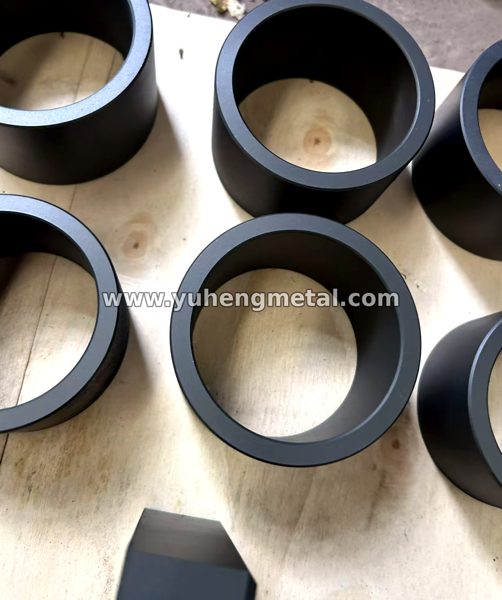 Slide bearings
Self-Lubricating Slide Bearings & Wear Plates
Self-lubricating slide bearings and wear plates for linear and rotary motion in heavy machinery, sized and machined to your housing.
Learn more →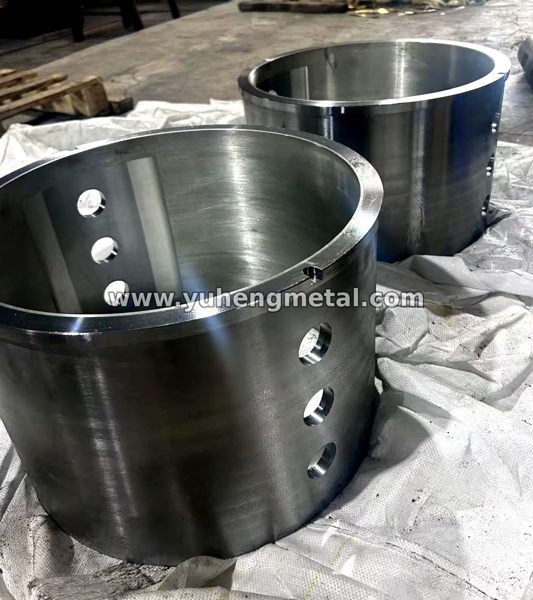 Babbitt & oil-film
Babbitt Bearing Shells & Oil-Film Bearings
Babbitt (white metal) bearing shells and oil-film bearings for heavy-duty rotating equipment - cast, bonded and machined to drawing.
Learn more →