Overview
A tool steel clad wear plate is two steels bonded into one piece: a high-alloy tool steel face where the sliding contact acts, and a low-carbon steel backing that meets the machine. The two are joined by explosion welding, so the interface is metallurgical rather than adhesive - the plate is machined, bolted and loaded as a single component.
The proportion is the point. Roughly 25% of the thickness is the hardened tool steel that takes the wear, and the remaining 75% is soft, tough backing that absorbs impact, carries the bolt preload and conforms to the seat. Face hardness is typically 62 ±2 HRC; the backing sits around 350-550 N/mm2. A stainless grade at 54 ±2 HRC is supplied where corrosion and wear occur together.
This is a precision part, not just a wear part. When a guide or chock liner thins, the clearance between the housing and the chock grows, the load concentrates on a smaller contact area, and the wear rate climbs from there. A flat, full-thickness plate restores the fit - which is why flatness and thickness are specified as tightly as hardness.
If the duty is pure abrasion with heavy impact and no sliding precision, a BT-CW bimetallic wear plate with a chromium carbide overlay is usually cheaper and longer lasting. Tool steel clad plate is chosen where the surface is a bearing or a guide, not a chute floor.
Where tool steel clad plates are used
Rolling-mill housing liners
Mill window and housing faces that guide the chocks and carry the roll load.
Roll chock liners and sliding plates
Wear faces on the chock that slide against the housing during roll changes.
Precision flat guides and slide ways
Guide bars and flat ways that must stay parallel and keep their thickness.
Sinter plant and pallet-car guides
Sliding surfaces in sinter strands and pallet cars where grit and heat are present.
Pendulum plates and pressure plates
Load-bearing plates under roll-force measurement and levelling systems.
Replacement for galled or worn seats
A new plate restores the original clearance instead of shimming a worn seat.
What to put on the drawing
- Working-face grade and hardness. The tool steel designation if the OEM names one, and the hardness in HRC - for example 62 ±2 HRC standard or 54 ±2 HRC for the stainless grade.
- Clad ratio and total thickness. Face thickness against backing thickness, and the finished overall thickness. This sets the wear allowance and the machining stock.
- Backing steel. The low-carbon or specified tough grade, with the standard if the drawing names one, and the backing strength if it is called out.
- Flatness and thickness tolerance. The value and the measuring method. A plate that is flat on the bench and sprung when bolted is a fitting problem, not a wear problem.
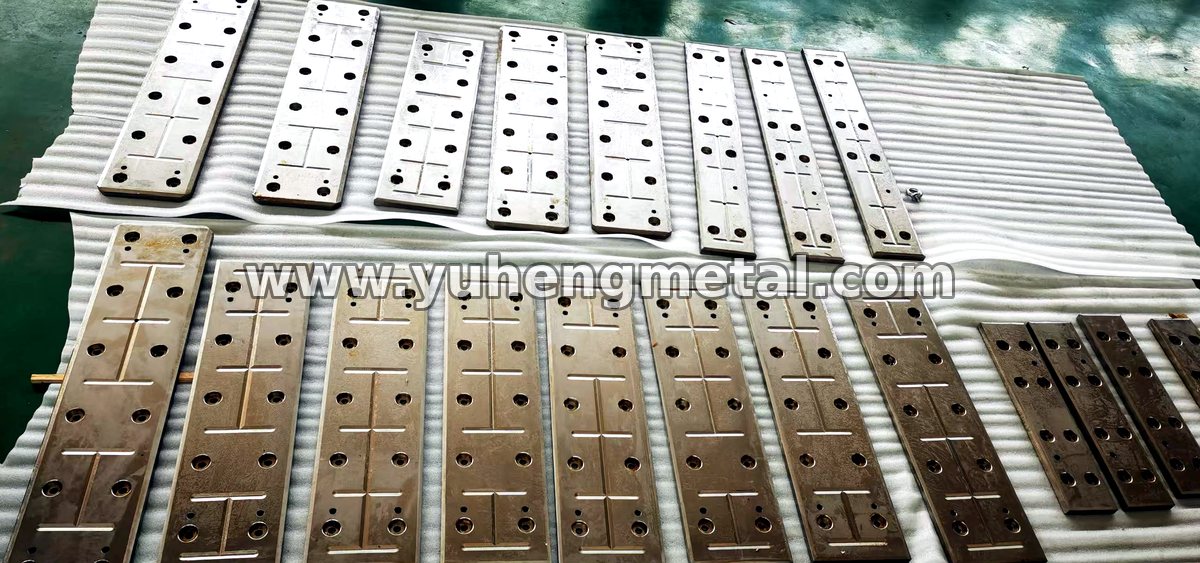
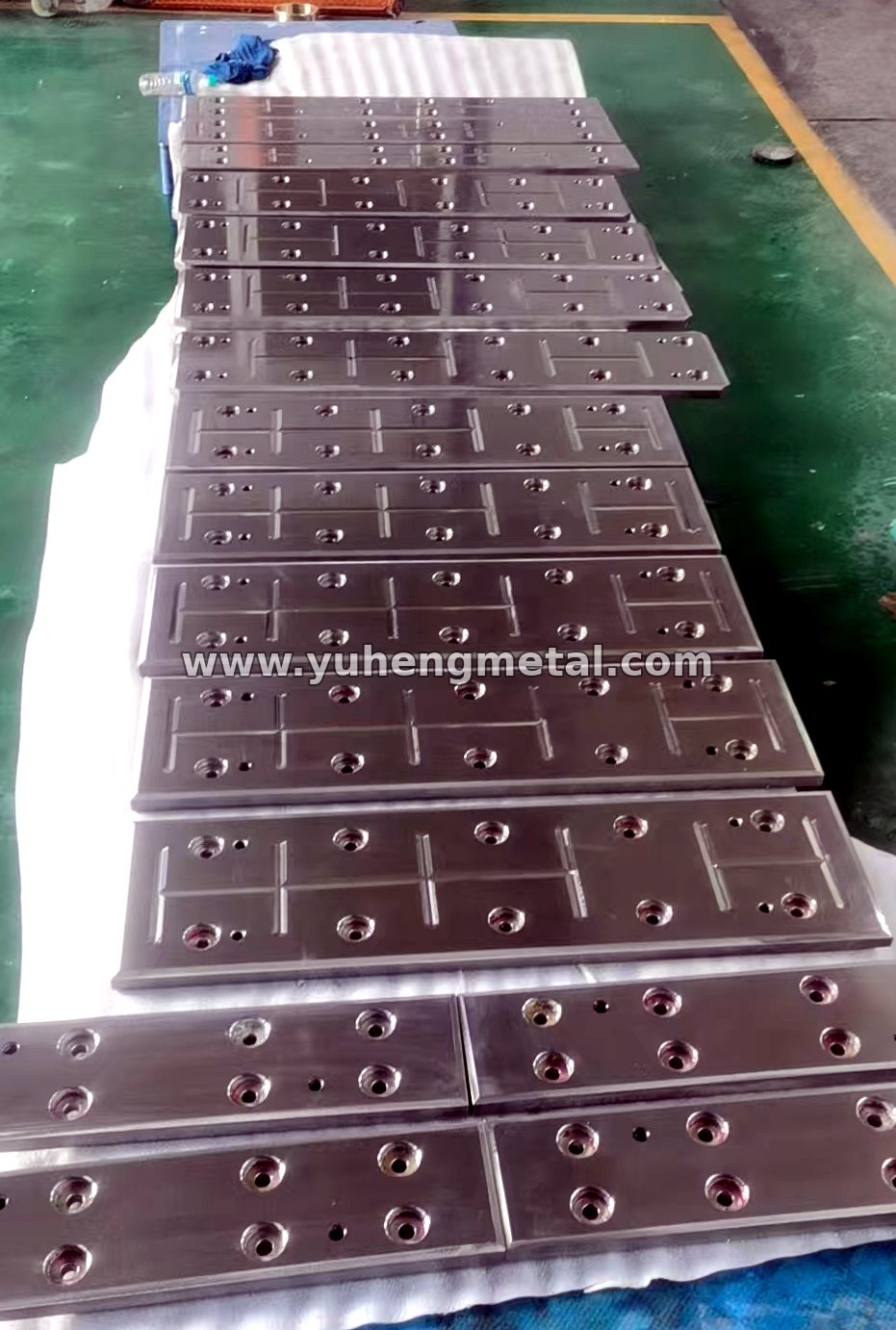
- Machining. Oil grooves, lubrication pockets, counterbores, keyways, edge chamfers and any relief cuts, referenced to the finished face.
- Fixing. Through holes, countersunk holes, tapped holes or weld-on, with the hole pattern. Or send the old plate and we copy it.
- Size and quantity. Outline, thickness and piece count, including spares if the liner is a consumable.
How we make it
The two steels are clad by explosion welding, cut to outline, stress-relieved where the drawing calls for it, then machined and ground flat. Holes, counterbores, oil grooves and keyways are cut after bonding, so they are positioned from the finished face.
- Clad interface checked before dispatch, with the result recorded against the plate.
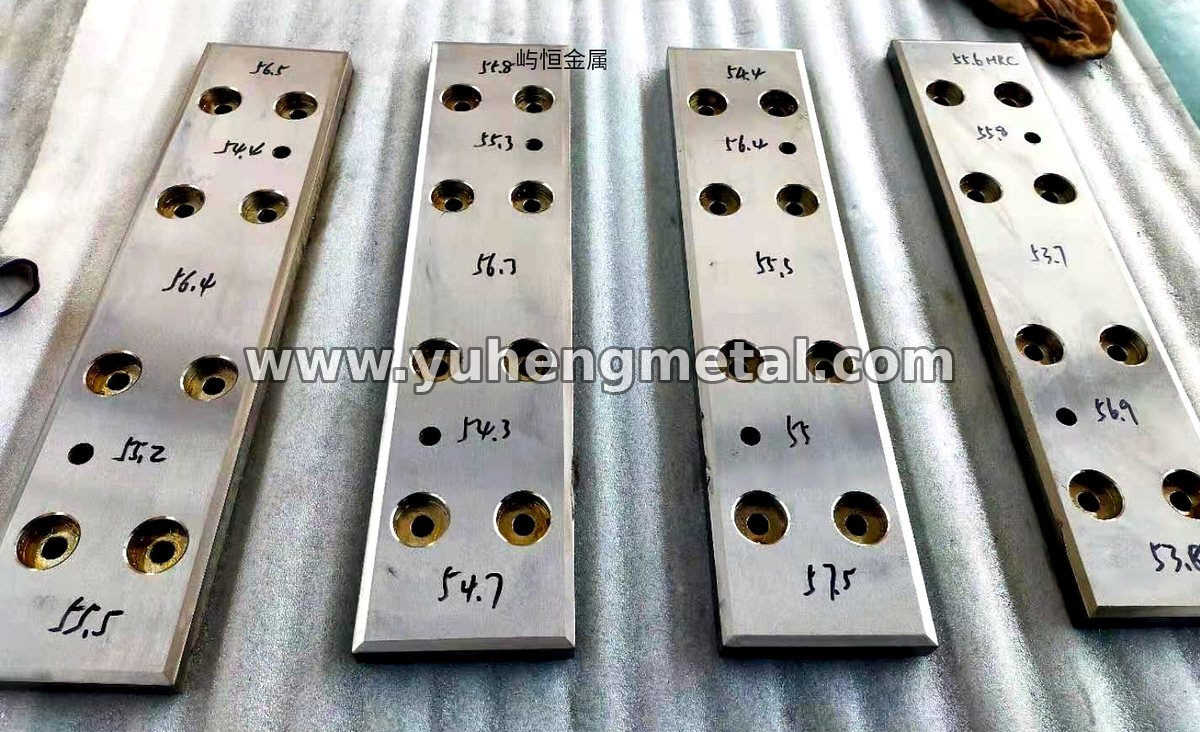
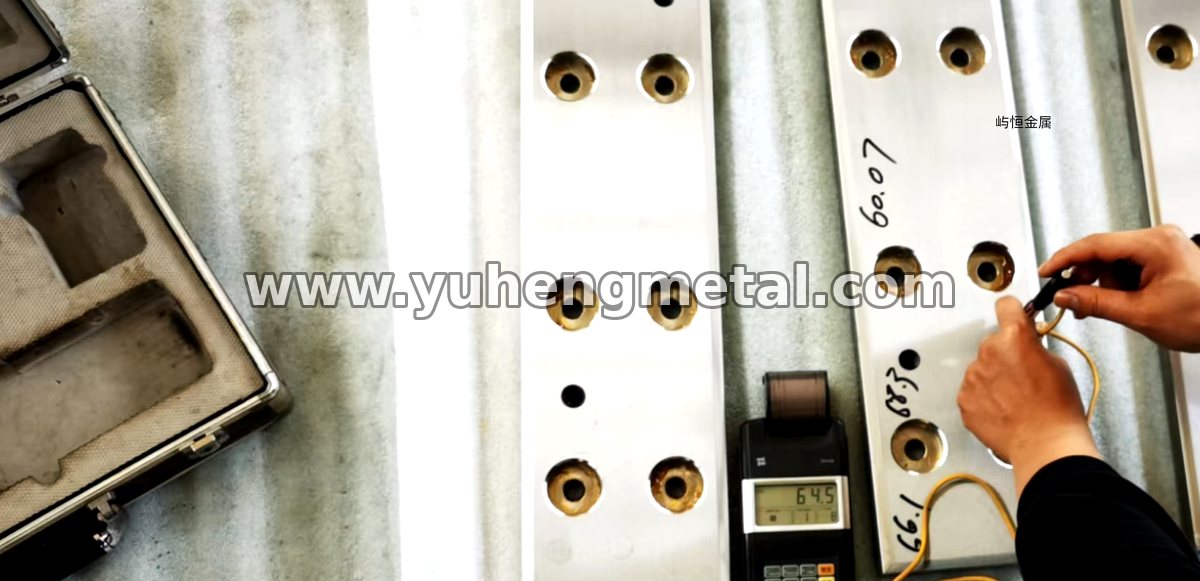
- Wear face hardness tested with a Leeb tester and the reading marked on the piece.
- Outline, flatness, thickness, hole pattern and counterbores checked against the drawing before packing.
- Records supplied with the delivery documents, traceable to the individual plate.
If the drawing names a construction or a grade we do not make, we will say so rather than substitute quietly. The explosion-welded compound steel page covers the T8, T10, 3Cr13 and 4Cr13 family of the same construction.
Specifications
| Type | Tool steel clad (bimetal) wear plate |
|---|---|
| Construction | High-alloy tool steel face metallurgically bonded to a low-carbon steel backing |
| Working face | High-alloy tool steel, standard or stainless grade, or the grade named on the drawing |
| Face hardness | 62 ±2 HRC standard; 54 ±2 HRC stainless grade; reading marked on each plate |
| Backing | Low-carbon steel, around 350-550 N/mm2, or the specified tough grade |
| Clad ratio | Typically about 25% face / 75% backing; the drawing sets the actual ratio |
| Thickness | Face, backing and finished thickness to drawing |
| Flatness | Machined and ground to the drawing tolerance, with the measuring method agreed |
| Machining | Oil grooves, lubrication pockets, counterbores, keyways, chamfers |
| Size | Cut and machined to drawing; large plates available |
| Fixing | Through holes, countersunk holes, tapped holes, weld-on |
| Lead time | 7-20 days |
Tool steel clad, compound steel or chromium carbide?
Tool steel clad (this page)
25% high-alloy tool steel on 75% low-carbon steel, 62 ±2 HRC. For mill housing liners, chock liners and precision flat guides where fit and flatness matter.
Compound steel (T8 / T10 / 3Cr13 / 4Cr13)
The same explosion-welded construction in Chinese tool steel grades, 55-64 HRC. A practical choice where the drawing names one of these grades or the duty is less severe.
Chromium carbide overlay (BT-CW)
A welded carbide-rich layer on mild steel, for chutes, hoppers and transfer points where abrasion and impact dominate.
Send the duty and the drawing together - the contact pressure, the sliding speed, the failure mode of the part being replaced and the tolerance that has to be held decide which of the three fits.
The CORC-G name
Buyers in the rolling-mill and sinter-plant market often ask for this construction by the trade name CORC-g, a registered trademark of Josua CORTS Sohn GmbH. We are not affiliated with CORTS and do not supply their product. What we make is the same class of plate - a hard tool steel face metallurgically bonded to a tough low-carbon backing, machined flat - and we describe it as equivalent in construction and duty, not in origin. Where a drawing carries a CORTS designation, send it with the duty and we will confirm what we can supply against it.
Product images
FAQ
- What is a tool steel clad wear plate? It is a bimetal plate made of two steels bonded into one piece: a high-alloy tool steel wear face on the working side and a low-carbon steel backing behind it. A common build-up is 25% working face and 75% backing. The bond is metallurgical, made by explosion welding, so the plate carries bolt loads and impact as one component instead of acting like a liner laid on top of a carrier.
- How is it different from a chromium carbide overlay plate? A chromium carbide overlay plate is built by welding a carbide-rich layer onto a mild steel backing. A tool steel clad plate is two solid steels bonded as one. Overlay plate usually wins on pure abrasion at high hardness; tool steel clad plate is chosen where the surface is a precision guide or a chock seat that must stay flat, be machined after bonding and hold its thickness. The BT-CW page covers the overlay option.
- Why is the backing left as low-carbon steel? The backing is the part that meets the machine. It is softer and tougher than the wear face, so it absorbs impact and conforms to the seat instead of transferring load into the housing or chock. It also carries the bolt preload and holds the plate flat. Hardening the whole thickness would make the plate brittle and would damage the seat it is bolted to.
- What hardness, clad ratio and thickness can you supply? The standard grade is 62 ±2 HRC on the working face with a backing around 350-550 N/mm2; a stainless grade is supplied at 54 ±2 HRC where corrosion and wear occur together. The 25/75 clad ratio is the common starting point. Total thickness, face thickness and backing thickness follow the drawing and the wear allowance you need between maintenance stops.
- Can you machine oil grooves, counterbores and keyways? Yes. Plates are cut to outline, milled and ground flat, then drilled, countersunk, grooved or keyed to the drawing. Oil grooves and lubrication pockets are machined after bonding, so their depth is taken from the finished face, not from the raw clad surface.
- What flatness and thickness tolerance can you hold? Flatness and thickness are quoted against the drawing, with the measuring method stated, because a plate that is flat on the bench and sprung when bolted is a fitting problem rather than a wear problem. Guide bars and precision flat guides are machined to the tolerance class the drawing asks for; we confirm the value in the quote rather than quoting a catalogue figure.
- How is the bond between the two steels checked? The clad interface is checked before dispatch and the result is recorded against the plate. Plates are also checked for outline, flatness, hole positions and counterbores against the drawing, and the wear face is hardness tested with a Leeb tester with the reading marked on the piece.
- Is this the same product as CORC-g? No. CORC-g is a registered trademark of Josua CORTS Sohn GmbH, and we are not affiliated with CORTS or authorised to supply their product. What we make is a comparable class of plate: two steels metallurgically bonded, a hard tool steel face on a tough backing. It is equivalent in construction and duty, not in origin, and we do not claim identical chemistry or identical service life.
- What is the lead time, and what records come with the plates? Typically 7-20 days depending on size, quantity and machining. Hardness readings, dimensional checks and the bond check are recorded and supplied with the delivery documents, traceable to the individual plate.
Related products
BT-CW bimetallic wear plates
Hard wear layer on a tough steel backing for chutes, hoppers and transfer points.
View product →Compound steelExplosion-welded compound steel
T8, T10, 3Cr13 and 4Cr13 face on a carbon-steel backing, 55-64 HRC.
View product →Slide plate305K slide plates
Zinc-based slide-way and guide plate where friction and galling matter as much as wear.
View product →CastingsCopper alloy castings
Tin bronze, aluminum bronze and leaded bronze bushings and sleeves to GB/T 1176.
View product →