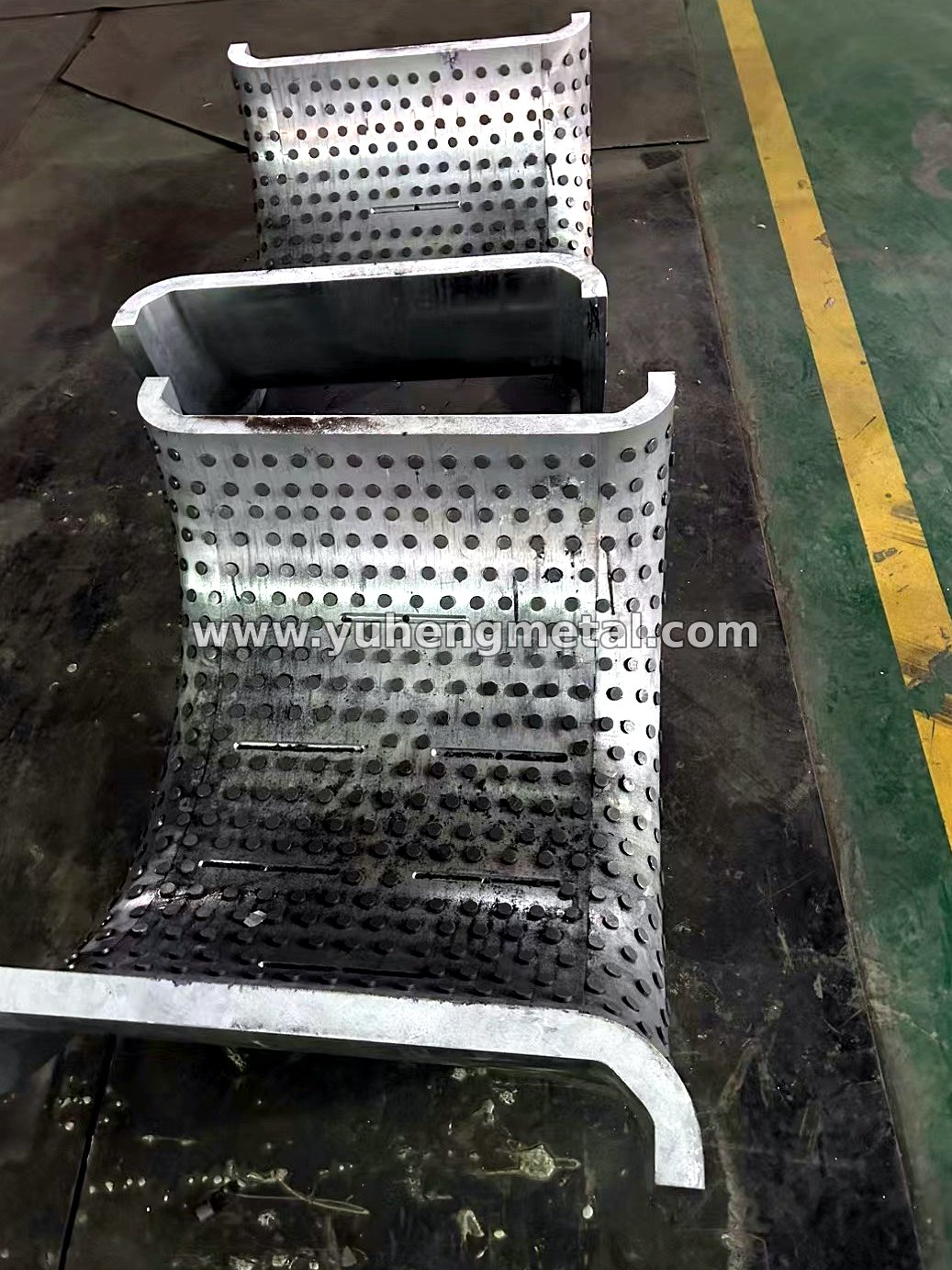
A rotary kiln turns at a walking pace - typically 0.5 to 5 revolutions per minute - and everything it weighs reaches the ground through four to eight bearings. Those bearings are trunnion bearings, and almost every serious kiln bearing problem is one of two things: the oil film was lost, or the shell started to move in its housing.
How the load gets to the foundation
The kiln shell carries the riding ring, which rests on two or four support rollers. Each roller turns on a gudgeon, and the gudgeon turns in a trunnion bearing mounted on the concrete pier. There is no gearbox and no rolling element in the path - just a shaft, a film of oil and a shell.
Two arrangements are common:
- Shell bearings - a full or half cylindrical shell, lubricated by oil fed through grooves, carrying the gudgeon over its whole width.
- Pad bearings - two or more discrete pads, sometimes with a spherical seat so that they can tilt and follow the gudgeon. Pads are easier to replace and easier to inspect one by one.
In both cases the bearing surface is expected to be the sacrificial part, and to be softer than the gudgeon it carries.
The duty is unusual
- Very high load. The bearing pressure is far above what a high-speed bearing would tolerate, because it does not have to survive speed as well.
- Very low sliding speed. Slow enough that the oil film is thin, and boundary lubrication is doing much of the work for much of the time.
- Misalignment. Kiln shell ovality, tire creep, roller skew and foundation settlement all arrive at the bearing as misalignment.
- Thermal movement. The kiln grows in length and diameter between cold and 1,000 C, and moves on its support rollers because of it.
- Dust. A cement plant deposits abrasive dust on every horizontal surface, including bearings.
- Long stops under load. When the kiln stops, the oil film drains and the shaft rests on the shell under full load - the worst moment of the bearing's life.
Choosing the material
| Material | Suits | Watch out for |
|---|---|---|
| ZA303 zinc-based alloy | low-speed, heavy-load duty at moderate temperature | temperature above about 150 C; keep within the duty window |
| Tin bronze | higher temperature, corrosive conditions, general kiln and mill duty | higher cost; can gall and seize if the film is lost |
| Aluminum bronze | the heaviest loads and shock | harder, poorer conformity - more demanding on alignment |
| Babbitt-lined steel shell | highest conformity and the best embeddability | lower load capacity and temperature limit than bronze |
In practice most kiln trunnion conversions move in one direction - from bronze or Babbitt to a zinc-based alloy such as ZA303 - because the duty is low speed and heavy load, which is exactly where the zinc-based alloy performs, and because the cost difference is substantial. That only works inside the duty window, and it is worth checking the numbers before ordering.
More on the material decision: Babbitt bearing shells explained and copper alloy castings and bronze bushings.
Design points that decide whether it survives
- Clearance. Diametral clearance set for the expected temperature rise, not copied from a table. Too tight closes up as the shell warms; too loose destroys the film.
- Oil grooves and oil holes. Positioned to feed the load zone, with the hole breaking into the groove. A groove in the wrong place is worse than no groove, because it interrupts the film where it is needed.
- Pad geometry. Curvature and contact angle set so the pad carries its share of the load without edge loading.
- Retention. Keyways, dowels, nips or bolting - the arrangement that stops the shell rotating in the housing.
- Fitting. Contact pattern checked and recorded before the kiln turns.
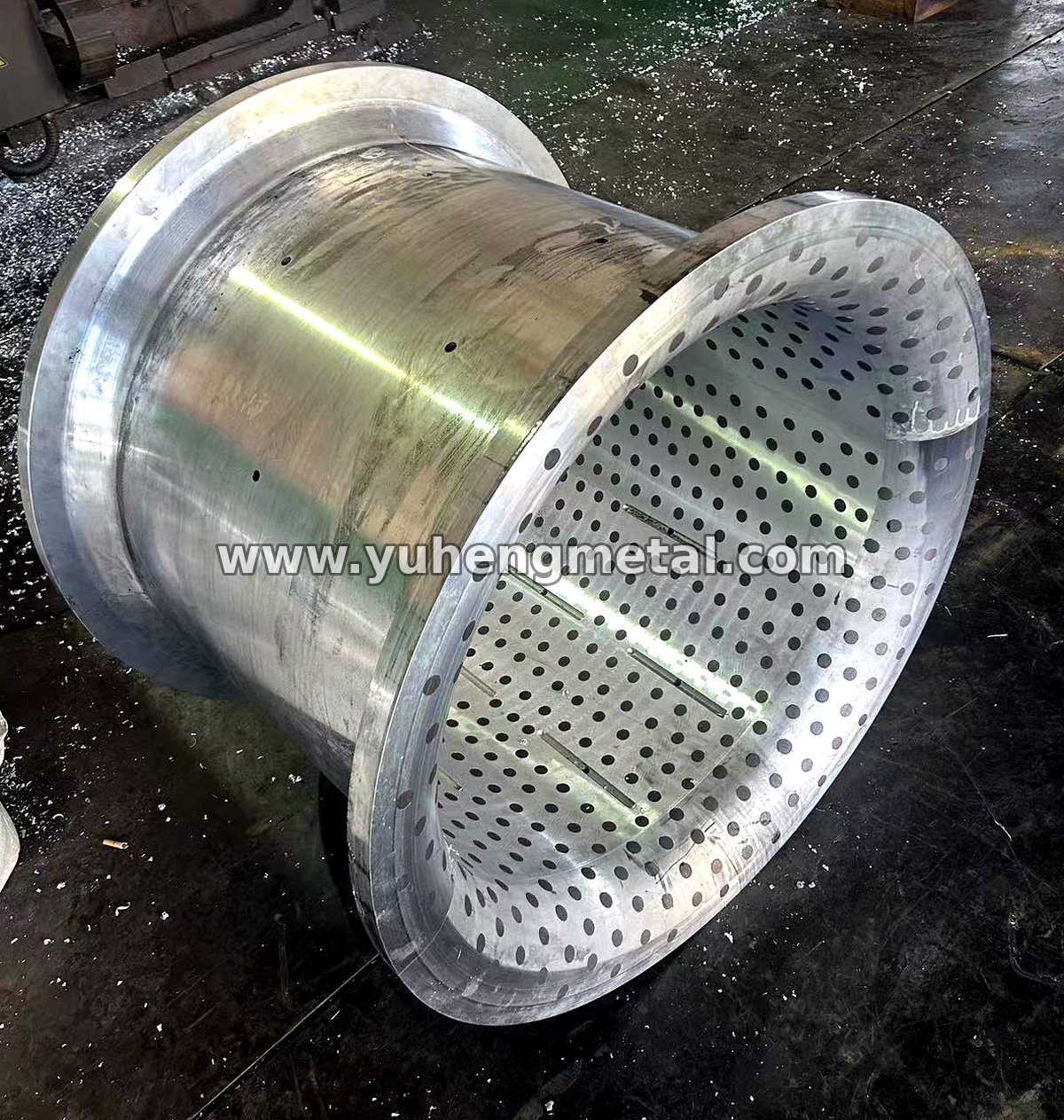
How the shells are made
Most of the shells and pads we make are replacements, and most of those arrive as a worn part rather than as a drawing. The sequence is consistent:
- Measure and reverse-engineer - either from the worn shell, from site measurements, or from the drawing if one exists. Housing bore, gudgeon diameter, width, oil way positions and the retention arrangement are the numbers that matter.
- Cast the shell or pad in ZA303, bronze or Babbitt-lined steel, depending on the duty.
- Machine - rough and finish bore, faces, oil grooves and holes, keyways and dowel holes. Large shells are bored on a horizontal boring machine and checked for roundness along their length, not just at the ends.
- Inspect and despatch with the clearance and contact pattern recorded.
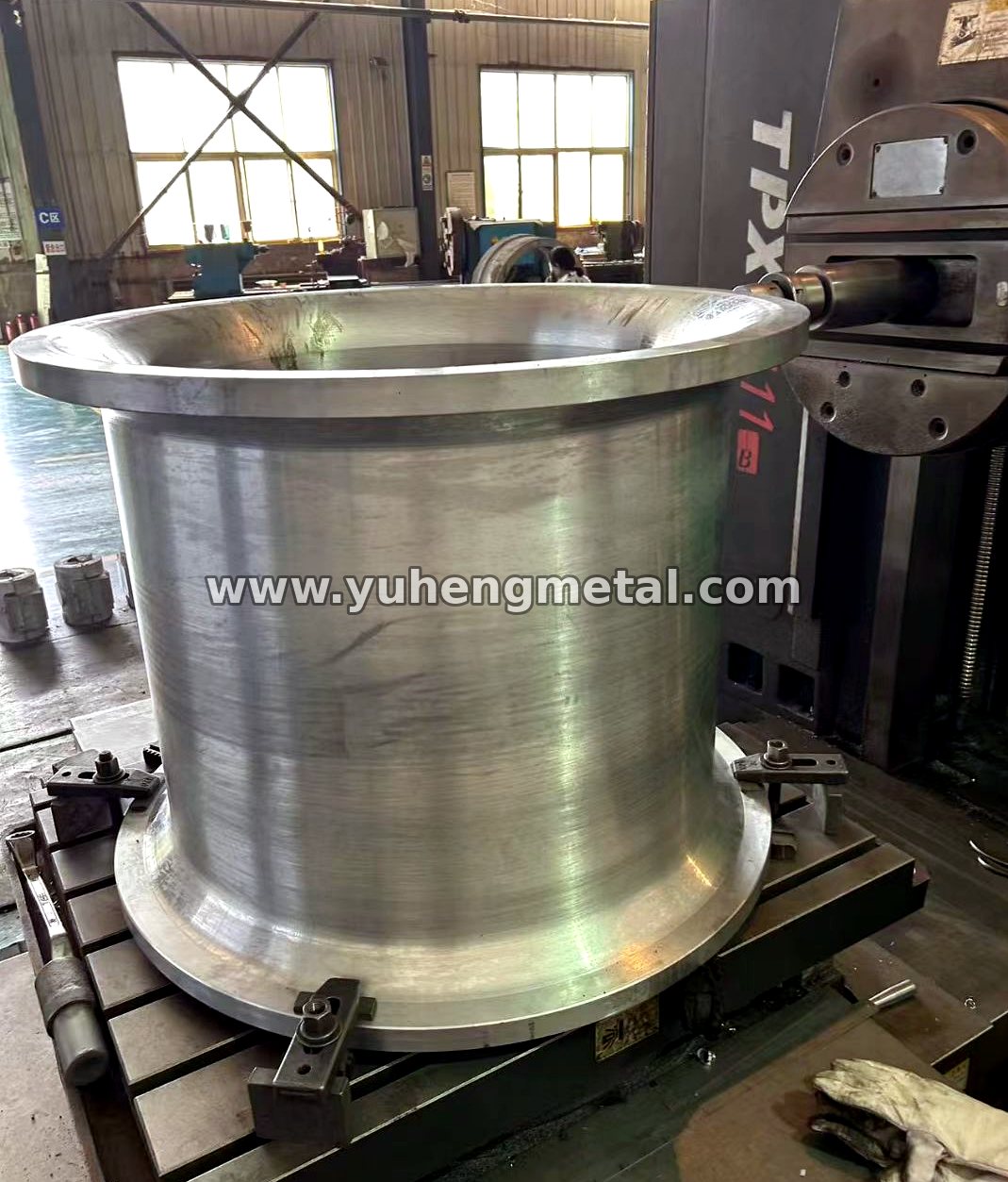
The two failures that cause most trouble
- Loss of the oil film. Blocked groove, low oil level, wrong grade, water in the oil or a long stop under load. The surface scores, then picks up, then seizes. The bearing is the victim; the oil circuit is the cause.
- Shell rotation (the shell turning in its housing). Caused by insufficient nip or interference, worn or missing keys and dowels, or a housing that was never a good fit. It wears the housing, and by the time it is noticed the repair has grown well beyond a bearing change.
Then the slower ones: fatigue cracking from misalignment and edge loading, dust contamination, and overheating from restricted oil flow.
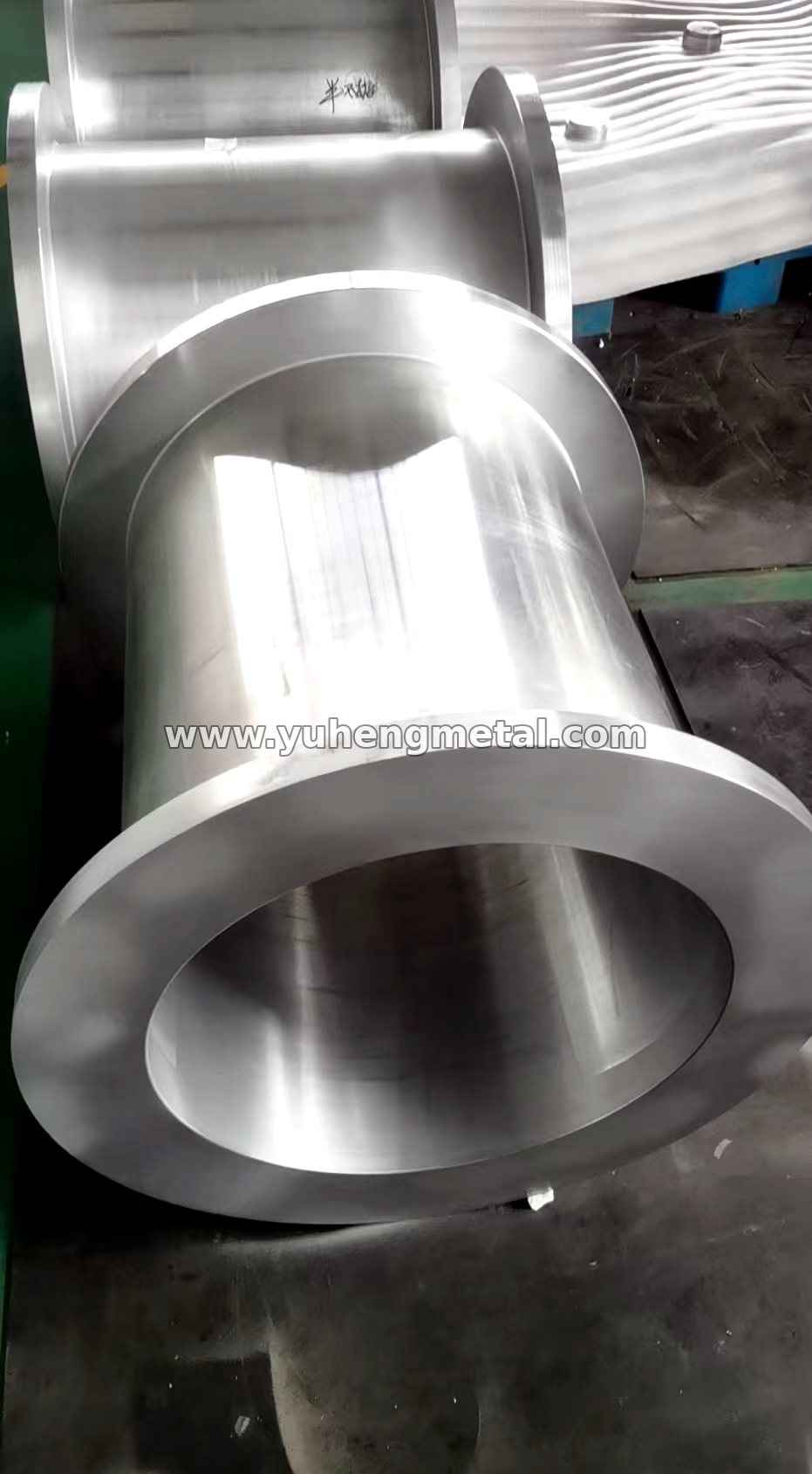
Service and replacement
- Monitor bearing temperature and oil condition continuously; a rising trend is the earliest warning available.
- At every kiln stop, check for oil leaks, correct oil level, and any sign of the shell moving in the housing.
- Check the contact pattern and clearance at longer intervals, and re-check support roller alignment after any bearing, roller or foundation work.
- Keep spare pads or a spare shell for each different size on the kiln. A bearing that arrives in a week beats a kiln that stands for a month.
Send us the worn bearing, the drawing, or the dimensions together with the kiln type, the load and the operating temperature, and we will come back with a material recommendation, a price and a lead time - including an honest view of whether the material you asked for is the right one.
Questions we get asked
What is a trunnion bearing on a rotary kiln?
The bearing that carries the gudgeon of a support roller. The kiln's riding ring rests on two or four support rollers, each turning in a trunnion bearing mounted on the pier, so the whole weight of the kiln reaches the foundation through these bearings.
Which material is best for kiln trunnion bearings?
It depends on duty. ZA303 zinc-based alloy suits low-speed, heavy-load duty at moderate temperature and costs much less; tin bronze suits higher temperatures and corrosive conditions; Babbitt-lined shells suit the highest speeds and the most conformable contact. Many kilns run happily on ZA303 pads.
Why does the bearing shell rotate in its housing?
Usually not enough nip or interference between the shell and the housing, worn or missing retaining keys and dowels, or a loosened housing fit. Once a shell starts to turn it wears the housing, and the repair becomes much larger than a bearing change.
How often should trunnion bearings be checked?
Temperature and oil condition continuously in service, with a visual and clearance check at each kiln stop. Checking the contact pattern and re-checking alignment after any bearing or roller change is what prevents the next failure.
Related products
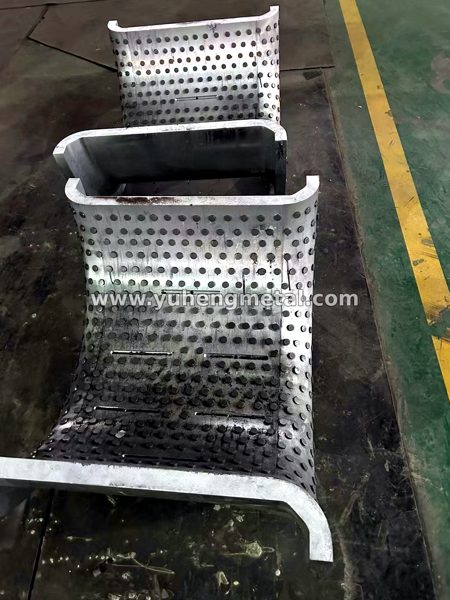 Heavy industry
Rotary Kiln Trunnion & Support Roller Bearings
Wear-resistant trunnion bearings, support-roller bearing pads and hollow-shaft bearings for rotary kilns, dryers and grinding mills.
Learn more →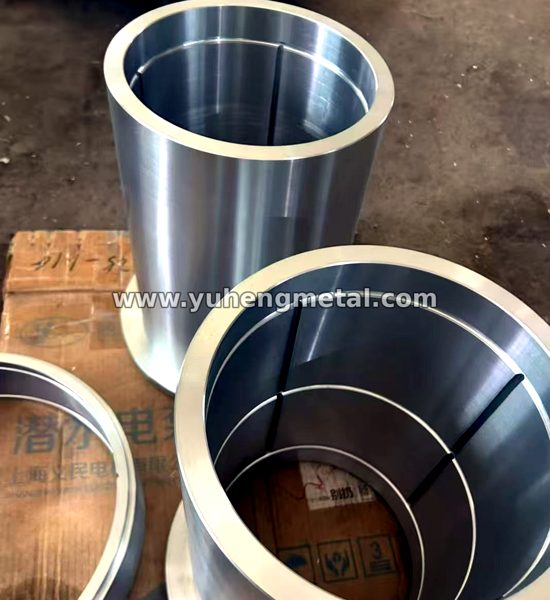 Babbitt alternative
ZA303 Zinc-Based Alloy Bearings & Bushings
High-strength ZA303 zinc-based alloy bearing shells and bushings with excellent load capacity, low friction and long service life - a cost-effective replacement for Babbitt metal.
Learn more →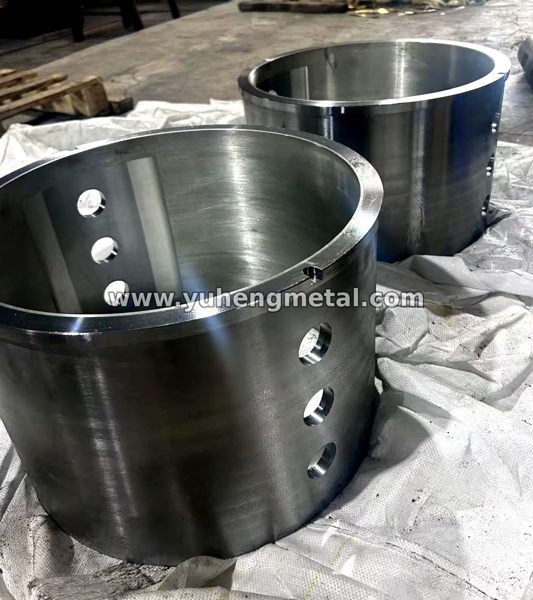 Babbitt & oil-film
Babbitt Bearing Shells & Oil-Film Bearings
Babbitt (white metal) bearing shells and oil-film bearings for heavy-duty rotating equipment - cast, bonded and machined to drawing, in tin-based and lead-based alloys.
Learn more →